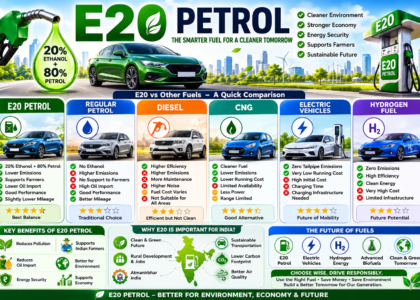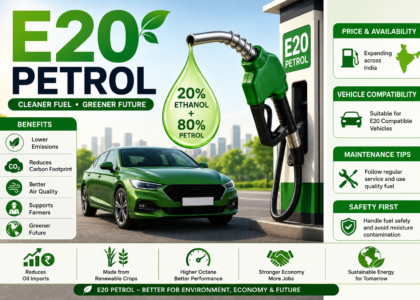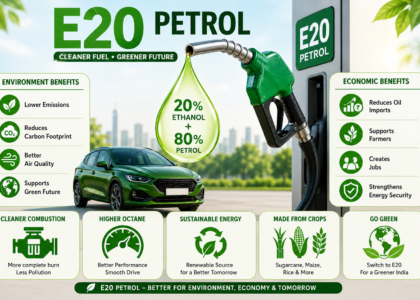
Introduction
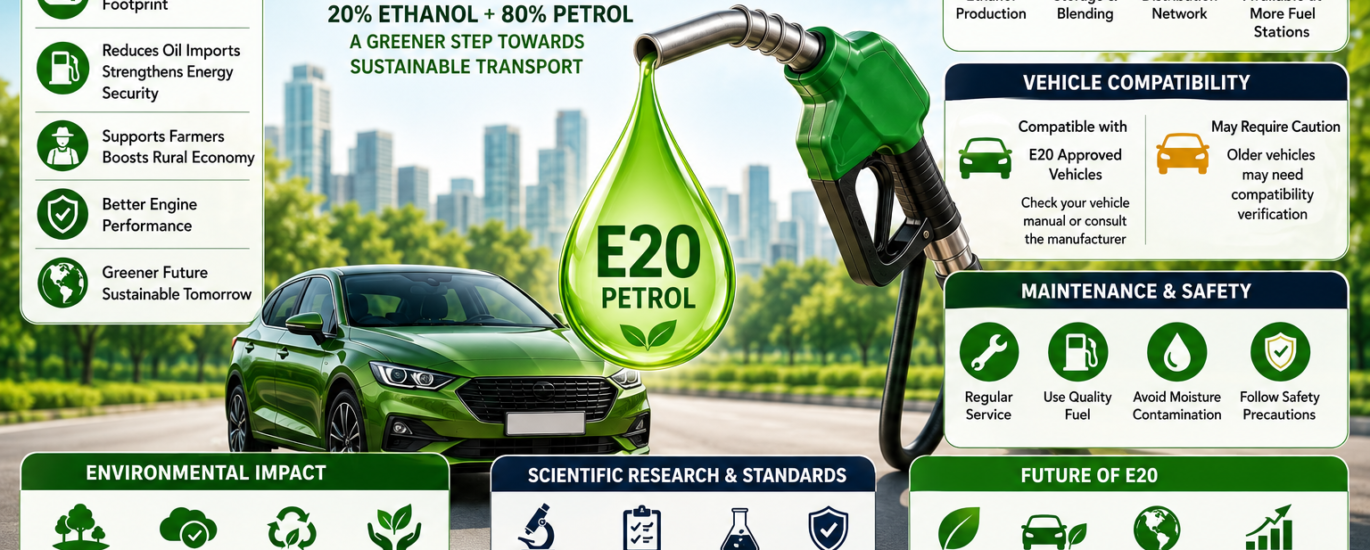
E20 petrol is more than just a new fuel blend—it represents a significant shift in the way countries approach transportation, energy security, and environmental sustainability. While earlier parts of this guide explained what E20 is, how it works, and its benefits, this section focuses on the scientific research, international fuel standards, challenges, emerging technologies, and the future of ethanol-blended fuels.
Scientific Research on E20 Petrol
Researchers worldwide have studied ethanol-blended fuels for decades. Most studies focus on:
- Engine performance
- Fuel economy
- Emissions
- Material compatibility
- Long-term engine durability
- Environmental impact
Results generally show that E20-compatible vehicles can operate safely on E20 petrol while achieving lower emissions compared to conventional petrol. A modest reduction in fuel economy may occur because ethanol contains less energy per litre.
Engine Durability Studies
Modern E20-compatible engines are designed using materials that resist the effects of ethanol, including:
- Stainless steel fuel system components
- Ethanol-resistant rubber seals
- Advanced polymers
- Corrosion-resistant fuel tanks
- High-quality fuel injectors
Long-term durability depends more on proper maintenance and manufacturer specifications than on the use of approved E20 fuel itself.
Fuel Quality Standards
Fuel quality is critical for engine reliability.
E20 petrol is produced according to established fuel quality standards covering:
- Ethanol purity
- Petrol quality
- Water content
- Octane rating
- Vapour pressure
- Sulphur limits
- Contaminant control
Maintaining these standards helps ensure consistent performance and engine protection.
Why Fuel Quality Matters
Poor-quality fuel can lead to:
- Injector deposits
- Reduced engine performance
- Starting problems
- Increased emissions
- Higher maintenance costs
Choosing fuel from reputable filling stations helps reduce these risks.
International Ethanol Fuel Standards
Many countries have established regulations governing ethanol blending.
Common objectives include:
- Fuel quality consistency
- Vehicle compatibility
- Consumer safety
- Environmental protection
- Reliable distribution systems
While blend percentages vary by country, quality control remains a universal priority.
Infrastructure Required for E20
Successful nationwide implementation requires investment in:
Ethanol Production Plants
Modern distilleries increase domestic ethanol production.
Storage Facilities
Proper storage minimizes contamination and maintains fuel quality.
Transportation Networks
Specialized logistics ensure efficient delivery from production facilities to blending terminals.
Fuel Blending Terminals
Automated systems precisely mix ethanol and petrol to achieve the required blend.
Petrol Stations
Fuel stations may require upgrades to storage tanks, pipelines, and dispensing equipment.
Challenges in Expanding E20
Although E20 has many benefits, several challenges remain.
1. Feedstock Availability
Producing enough ethanol requires reliable supplies of agricultural feedstocks such as sugarcane and maize.
2. Infrastructure Costs
Expanding production, storage, and distribution requires significant investment.
3. Vehicle Compatibility
Not all older vehicles are designed for E20.
4. Consumer Awareness
Many drivers are still unfamiliar with E20 and its benefits.
5. Seasonal Agricultural Variations
Crop production may vary due to weather and other factors.
Research into Advanced Biofuels
Scientists are developing next-generation biofuels that can reduce pressure on food crops.
These include:
- Cellulosic ethanol
- Agricultural residue-based ethanol
- Algae-based biofuels
- Waste-to-fuel technologies
These innovations aim to improve sustainability while reducing environmental impact.
Second-Generation (2G) Ethanol
Second-generation ethanol is produced from non-food biomass such as:
- Rice straw
- Wheat straw
- Corn stalks
- Sugarcane bagasse
- Bamboo
- Forestry residues
Advantages include:
- Reduced dependence on food crops
- Better waste utilization
- Lower environmental impact
- Increased renewable fuel production
Future Engine Technologies
Vehicle manufacturers continue improving engines for ethanol compatibility.
Future developments may include:
- More efficient fuel injection systems
- Advanced combustion chambers
- Intelligent engine control systems
- Improved fuel pumps
- Enhanced corrosion-resistant materials
These innovations can further improve performance and reliability.
Flex-Fuel Vehicles
Flex-fuel vehicles (FFVs) are specially designed to operate on a wide range of ethanol blends, including:
- E20
- E30
- E50
- E85 (depending on the model)
Sensors in FFVs automatically detect the ethanol content and adjust fuel delivery and ignition timing accordingly.
E20 and Carbon Neutrality
E20 is not completely carbon-neutral, but it contributes to lower lifecycle greenhouse gas emissions compared to pure petrol.
This is because:
- Crops absorb carbon dioxide during growth.
- Ethanol replaces part of the fossil fuel.
- Renewable feedstocks reduce dependence on crude oil.
The overall environmental benefit depends on sustainable farming and efficient ethanol production.
Consumer Awareness
Public understanding is essential for the successful adoption of E20.
Consumers should know:
- Whether their vehicle is E20 compatible
- Where E20 is available
- Proper maintenance practices
- Environmental benefits
- Manufacturer recommendations
Frequently Asked Consumer Questions
Many consumers ask:
- Will E20 damage my engine?
- Does E20 reduce mileage?
- Is E20 more expensive?
- Can I mix E20 with regular petrol?
- Is E20 available everywhere?
The answers depend on vehicle compatibility, local availability, and official manufacturer guidance.
Best Practices for Using E20
For the best experience:
- Always use fuel recommended by the manufacturer.
- Buy fuel from trusted petrol stations.
- Keep your vehicle properly serviced.
- Monitor tyre pressure.
- Replace filters as scheduled.
- Avoid storing fuel for extended periods.
- Follow the owner’s manual.
Role of Automobile Manufacturers
Vehicle manufacturers play a key role by:
- Designing E20-compatible engines
- Testing new materials
- Updating engine software
- Educating customers
- Providing technical support
Role of Fuel Companies
Fuel companies contribute by:
- Producing high-quality fuel
- Maintaining quality standards
- Expanding E20 availability
- Upgrading fuel infrastructure
- Supporting public awareness campaigns
Role of Farmers
Farmers are central to the ethanol ecosystem.
They contribute by supplying crops such as:
- Sugarcane
- Maize
- Rice
- Wheat
Growing demand for ethanol feedstocks can create additional market opportunities for agriculture.
Role of Researchers
Researchers continue working on:
- Cleaner fuels
- Efficient ethanol production
- Improved engines
- Sustainable farming
- Advanced biofuel technologies
Their work supports the long-term success of renewable transportation fuels.
Global Outlook
Many countries are expected to continue increasing the use of renewable fuels.
Future trends may include:
- Higher ethanol blends in compatible vehicles
- Expansion of flex-fuel technologies
- Increased use of advanced biofuels
- Better fuel efficiency
- Lower emissions
- Stronger environmental regulations
The Future Beyond E20
E20 is part of a broader transition toward cleaner transportation.
Future mobility may include:
- Electric vehicles (EVs)
- Hydrogen fuel-cell vehicles
- Sustainable aviation fuels
- Synthetic fuels
- Renewable diesel
- Advanced biofuels
Rather than replacing one another, these technologies are likely to coexist to meet different transportation needs.
Final Expert Recommendations
If your vehicle is approved for E20:
- Use E20 confidently.
- Follow the manufacturer’s maintenance schedule.
- Purchase fuel from reputable stations.
- Stay informed about official updates.
- Practice efficient driving habits.
If your vehicle is not approved for E20, consult the manufacturer before switching fuels.
Final Conclusion
E20 petrol represents one of India’s most important renewable fuel initiatives. By blending ethanol with petrol, the country aims to reduce crude oil imports, strengthen energy security, support farmers, and lower emissions.
For consumers, the key to successful use is simple:
- Confirm vehicle compatibility.
- Follow manufacturer recommendations.
- Maintain the vehicle properly.
- Use quality fuel.
- Stay informed as technology evolves.
As research, infrastructure, and vehicle technology continue to improve, E20 is expected to remain a valuable part of India’s journey toward a cleaner and more sustainable transportation system.
Complete Series Summary
Across all five parts, this guide has covered:
- Introduction to E20 Petrol
- Ethanol Production Process
- Chemical Properties
- Government Policies
- Vehicle Compatibility
- Mileage & Engine Performance
- Advantages & Disadvantages
- Environmental Benefits
- Economic Impact
- Global Adoption
- Fuel Standards
- Safety & Storage
- Maintenance Tips
- Scientific Research
- Future Technologies
- Flex-Fuel Vehicles
- Consumer Awareness
- Expert Recommendations
- Hundreds of SEO-Friendly FAQs
This comprehensive resource is designed to serve as a long-term reference for readers seeking reliable information about E20 petrol and its role in the future of sustainable transportation.