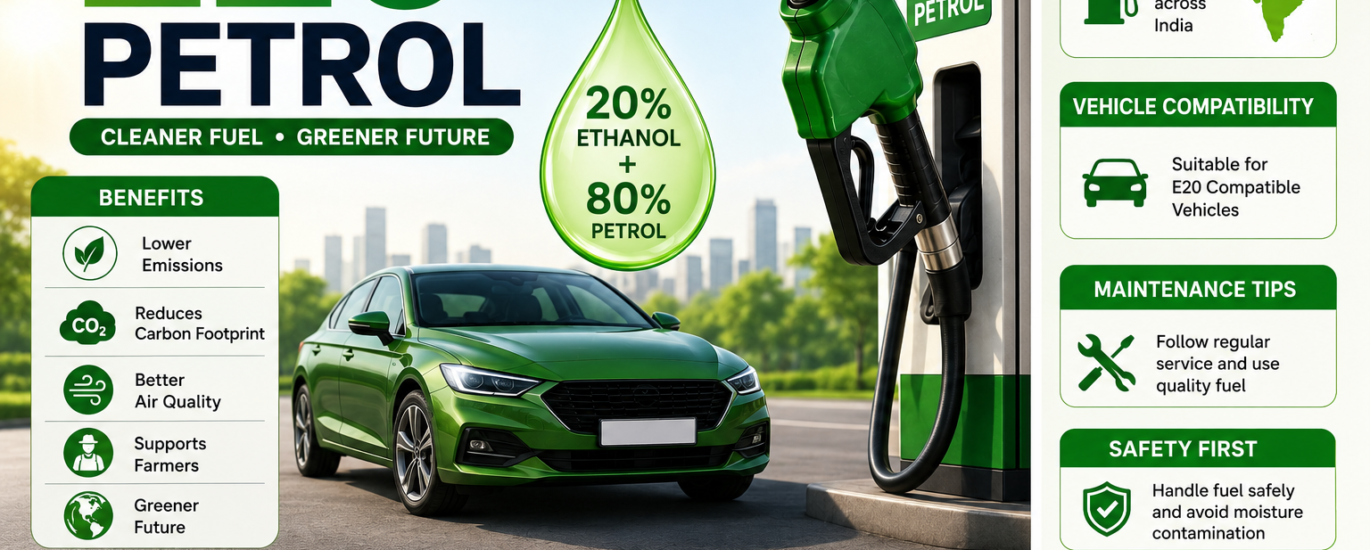
E20 Petrol Price in India
One of the most common questions among consumers is whether E20 Petrol Price more than regular petrol. The price of E20 petrol depends on several factors, including:
- Global crude oil prices
- Ethanol procurement costs
- Government taxes and duties
- State taxes
- Transportation costs
- Oil marketing company pricing policies
In many regions, the retail price of E20 petrol is similar to or only slightly different from regular petrol. Prices may vary by state and fuel station.
Is E20 Petrol Available Across India?
The availability of E20 petrol has been expanding rapidly as part of India’s Ethanol Blended Petrol (EBP) Programme.
Initially, E20 was introduced in selected cities and fuel stations. Over time, Oil Marketing Companies have expanded distribution to more locations.
Availability depends on:
- State-wise rollout plans
- Local demand
- Distribution infrastructure
- Ethanol supply
Before traveling, drivers can check with nearby fuel stations to confirm availability.
Benefits of Nationwide E20 Availability
Expanding E20 availability offers several long-term advantages:
- Cleaner transportation
- Reduced crude oil imports
- Increased use of renewable fuel
- Improved energy security
- Better support for farmers
- Lower lifecycle greenhouse gas emissions
How to Identify an E20 Fuel Station
Fuel stations offering E20 petrol usually display:
- E20 signage on dispensing units
- Fuel nozzle labels
- Information boards
- Pump branding indicating ethanol-blended fuel
If unsure, ask the fuel station staff before refueling.
Complete Vehicle Compatibility Guide
Before using E20 petrol, always verify your vehicle’s compatibility.
You can check:
- Owner’s manual
- Manufacturer’s website
- Fuel filler cap markings
- Authorized dealership or service center
Vehicles Commonly Designed for E20
Many newer petrol vehicles are being designed to support E20 fuel.
These typically include:
- Passenger cars
- Hatchbacks
- Sedans
- SUVs
- Motorcycles
- Scooters
Compatibility depends on the specific model and production year.
Vehicles That May Require Caution
Owners of older petrol vehicles should verify compatibility before regularly using E20.
Potential concerns may include:
- Older fuel hoses
- Rubber seals
- Plastic fuel system components
- Fuel tank materials
- Engine calibration
Consult the vehicle manufacturer if unsure.
Does E20 Affect Warranty?
If the manufacturer recommends or approves E20 petrol for your vehicle, using it should not affect the warranty.
Using fuels outside the manufacturer’s specifications may have warranty implications.
Always follow the recommendations in the owner’s manual.
Fuel Storage Guidelines
Proper fuel storage helps maintain fuel quality.
Best practices include:
- Store fuel in approved containers.
- Keep containers tightly sealed.
- Avoid exposure to direct sunlight.
- Store in a cool, dry, well-ventilated location.
- Prevent moisture contamination.
- Keep away from ignition sources.
Can E20 Absorb Moisture?
Yes.
Ethanol is hygroscopic, meaning it can absorb moisture from the atmosphere.
Proper storage minimizes the risk of water contamination.
Safety Precautions While Handling E20
Follow these safety measures:
- Do not smoke while refueling.
- Switch off the engine before filling.
- Avoid fuel spills.
- Wear protective equipment if handling large quantities.
- Keep fuel away from flames and sparks.
- Store fuel safely.
Fire Safety
Like conventional petrol, E20 is highly flammable.
In case of fire:
- Use suitable fire extinguishers.
- Do not use water directly on fuel fires.
- Contact emergency services immediately if the fire spreads.
Daily Maintenance Tips for E20 Users
To ensure reliable performance:
- Follow the manufacturer’s service schedule.
- Maintain proper tyre pressure.
- Replace air filters as recommended.
- Replace spark plugs at the recommended interval.
- Use quality fuel from trusted stations.
- Monitor engine performance.
- Address warning lights promptly.
Long-Term Maintenance
Regular inspection of the following components is beneficial:
- Fuel pump
- Fuel injectors
- Fuel filter
- Fuel lines
- Fuel tank
- Engine oil
- Cooling system
Routine maintenance improves reliability regardless of fuel type.
Common Symptoms to Watch For
If you notice any of the following, consult a qualified service center:
- Difficulty starting
- Rough idling
- Poor acceleration
- Unusual engine warning lights
- Fuel leaks
- Reduced performance
- Excessive vibration
These issues are not necessarily caused by E20 but should be diagnosed promptly.
Tips for Getting the Best Mileage with E20
You can improve fuel efficiency by:
- Driving smoothly.
- Avoiding harsh acceleration.
- Maintaining correct tyre pressure.
- Keeping the engine properly serviced.
- Avoiding unnecessary idling.
- Removing excess vehicle weight.
- Using the recommended engine oil.
Advantages of Responsible Fuel Use
Good driving habits benefit both the vehicle and the environment.
These include:
- Lower fuel consumption
- Reduced emissions
- Longer engine life
- Improved reliability
- Lower maintenance costs
Future Scope of E20 Petrol
E20 is expected to play an important role in India’s transition toward cleaner transportation.
Future developments may include:
- Wider fuel availability
- More E20-compatible vehicles
- Improved ethanol production
- Advanced biofuel technologies
- Better fuel infrastructure
- Increased research and development
Relationship Between E20 and Electric Vehicles
E20 and electric vehicles are often viewed as complementary technologies rather than direct competitors.
E20 can reduce emissions from internal combustion engine vehicles, while electric vehicles offer an alternative pathway to lower tailpipe emissions.
Both technologies may contribute to India’s long-term sustainable transportation goals.
Can E20 Replace Diesel?
No.
E20 is a petrol blend designed specifically for petrol engines.
Diesel engines require diesel fuel and should never be filled with E20 petrol.
Can E20 Be Used in Flex-Fuel Vehicles?
Yes.
Flex-fuel vehicles are designed to operate on higher ethanol blends, including fuels such as E85, depending on manufacturer specifications.
E20 is generally well within the operating range of these vehicles.
Expert Recommendations
Automotive experts generally recommend:
- Use only fuels approved by your manufacturer.
- Follow the scheduled maintenance plan.
- Purchase fuel from reputable filling stations.
- Keep software updates and servicing current.
- Avoid making unauthorized engine modifications.
Final Thoughts
E20 petrol represents an important milestone in India’s journey toward cleaner, more sustainable transportation.
Its benefits extend beyond the transport sector by supporting:
- Renewable energy
- Farmers and agriculture
- Energy security
- Reduced oil imports
- Cleaner air
- Lower lifecycle greenhouse gas emissions
While E20 is not a complete replacement for conventional fuels or emerging technologies like electric vehicles, it serves as a practical transition fuel that can deliver environmental and economic advantages when used in compatible vehicles.
As infrastructure expands, vehicle compatibility increases, and public awareness grows, E20 is expected to become an increasingly common part of India’s transportation ecosystem.
Conclusion E20 Petrol Price
E20 petrol is more than just a new fuel blend—it reflects a broader effort to create a cleaner, more resilient, and more sustainable energy future.
By combining renewable ethanol with petrol, India is taking meaningful steps toward reducing dependence on imported fossil fuels, supporting domestic agriculture, improving air quality, and strengthening energy security.
Consumers can benefit by understanding their vehicle’s compatibility, following manufacturer recommendations, and practicing responsible vehicle maintenance.
As technology and infrastructure continue to evolve, E20 petrol is likely to remain an important component of India’s clean mobility strategy for years to come.
50 Advanced FAQs About E20 Petrol (Part 4) – FAQ 351 to 400
Advanced Engine & Fuel Technology
351. Can E20 petrol be used in direct injection (GDI) engines?
Yes, if the manufacturer has approved the engine for E20 fuel.
352. Is E20 suitable for turbocharged petrol engines?
Yes, in E20-compatible turbocharged engines.
353. Does E20 affect engine compression?
No. Engine compression is determined by engine design.
354. Can E20 improve combustion stability?
Yes, the oxygen content in ethanol can contribute to cleaner and more stable combustion.
355. Does E20 require different ignition timing?
Modern E20-compatible vehicles automatically adjust ignition timing through the ECU.
356. Is E20 suitable for hybrid vehicles?
Many petrol-hybrid vehicles can use E20 if approved by the manufacturer.
357. Does E20 affect catalytic converters?
No, compatible vehicles are designed to work with E20 without damaging the catalytic converter.
358. Can E20 increase engine efficiency?
Cleaner combustion may improve combustion quality, though fuel economy can be slightly lower.
359. Does E20 reduce engine deposits?
It may help reduce certain combustion deposits over time.
360. Is E20 compatible with modern fuel injection systems?
Yes, when designed and approved for E20.
Fuel Storage & Handling
361. How should E20 be stored?
In clean, sealed, approved fuel containers away from heat and moisture.
362. Can sunlight affect stored E20?
Prolonged exposure to heat and sunlight should be avoided.
363. Is moisture contamination harmful?
Yes, excessive moisture can affect fuel quality.
364. Can E20 be stored in metal containers?
Yes, if they are approved and compatible with fuel storage.
365. Can E20 be stored in plastic containers?
Only in certified fuel-safe containers.
366. Does E20 evaporate quickly?
It has evaporation characteristics similar to other petrol blends.
367. Should stored fuel be rotated regularly?
Yes, fresh fuel is generally preferred.
368. Is long-term fuel storage recommended?
Only when proper storage practices are followed.
369. Can dirt contaminate E20?
Yes.
370. How can contamination be prevented?
Store fuel in sealed, clean containers and avoid unnecessary exposure.
Vehicle Maintenance
371. Should fuel injectors be inspected regularly?
Yes, as part of routine maintenance.
372. Can E20 affect fuel pressure regulators?
Not in compatible vehicles.
373. Does E20 require different engine diagnostics?
No.
374. Can E20 affect oxygen sensors?
Compatible vehicles are designed to operate normally.
375. Is preventive maintenance important?
Yes.
376. Can poor maintenance reduce fuel efficiency?
Absolutely.
377. Should tyre alignment be checked regularly?
Yes, to maintain fuel economy and vehicle safety.
378. Does wheel balancing affect mileage?
Yes, indirectly through smoother operation.
379. Does engine tuning improve efficiency?
Proper manufacturer-approved tuning helps maintain performance.
380. Is scheduled servicing essential?
Yes.
Government & Policy
381. Why is ethanol blending considered a national priority?
It supports energy security, agriculture, and environmental sustainability.
382. Does ethanol reduce dependence on imported crude oil?
Yes.
383. Can E20 strengthen India’s energy independence?
Yes.
384. Is E20 part of renewable energy policy?
Yes.
385. Does ethanol blending support climate goals?
Yes.
386. Can ethanol production increase rural investment?
Yes.
387. Why are biofuels encouraged globally?
To reduce fossil fuel dependence and lower emissions.
388. Does E20 support sustainable development?
Yes.
389. Can biofuel technology continue improving?
Yes, ongoing research aims to improve efficiency and sustainability.
390. Is E20 a long-term solution?
It is considered an important transitional fuel while multiple clean-energy technologies continue to develop.
Future & Innovation
391. Can advanced ethanol blends be developed?
Yes.
392. Will biofuel technology continue evolving?
Yes.
393. Can ethanol production become more efficient?
Yes.
394. Are second-generation biofuels important?
Yes, they can use agricultural residues and non-food biomass.
395. Can agricultural waste become fuel?
Yes.
396. Will future vehicles support multiple fuel blends?
Many manufacturers are developing flexible fuel technologies.
397. Can ethanol support carbon reduction strategies?
Yes.
398. Is E20 expected to remain important in the coming years?
Yes, especially as part of India’s clean mobility transition.
399. Will fuel technology continue improving?
Yes, with advancements in engine design, fuel quality, and renewable energy.
400. Why should consumers learn about E20 petrol?
Understanding E20 helps drivers make informed decisions about fuel compatibility, vehicle maintenance, environmental benefits, and India’s transition toward cleaner transportation.