Property Registration Day Checklist in Durgapur: Documents, Payments and Final Checks
· Durgapur Property
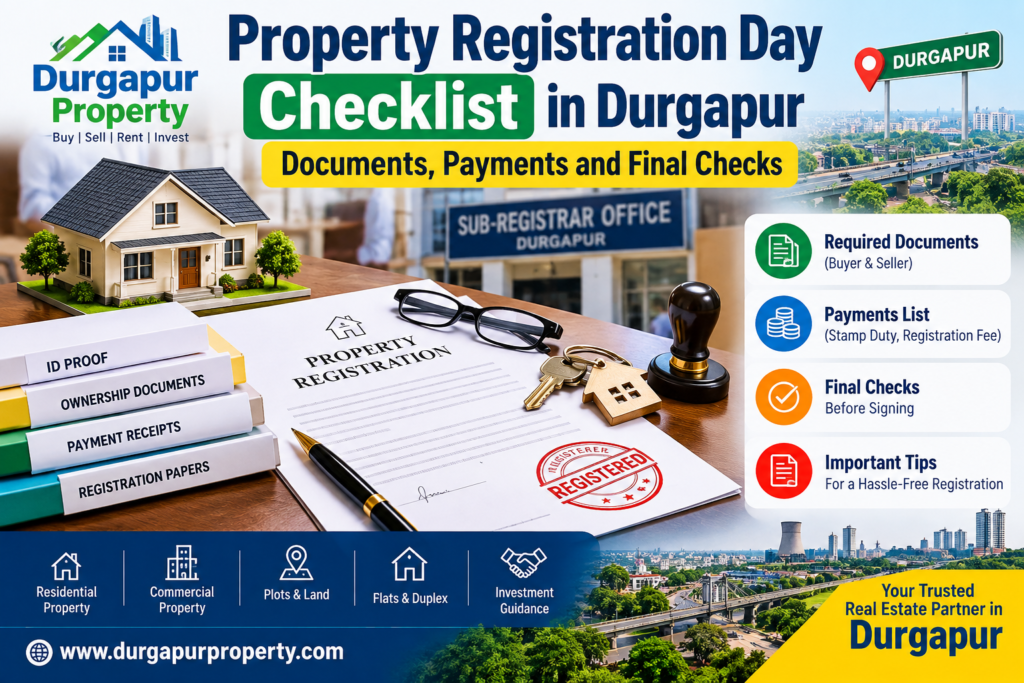
Property Registration Day Checklist in Durgapur: Documents, Payments and Final Checks is an important part of property due diligence for buyers in Durgapur. The safest process is to verify the documents, compare information, inspect the property where relevant and keep a written evidence trail before making a major financial commitment. This guide is educational and should be combined with advice from a qualified property professional for the specific transaction.
1. Start With the Property File
- Record the document and date.
- Match names and property identifiers.
- Note unresolved discrepancies.
- Keep payment and correspondence evidence.
2. Why This Check Matters
A buyer should treat property registration day checklist as a verification exercise rather than a formality. Compare the seller’s explanation with documentary evidence and, where relevant, the physical property. Check property registration day checklist, the property description, owner details, transaction records and supporting documents. If two records use different descriptions, do not automatically assume they refer to different properties or that one is wrong. Ask for clarification and supporting records. The same approach should be used for dates, names, plot identifiers, flat numbers and payment details. Keeping a written question-and-answer trail can be useful when several people are involved in a transaction.
3. Documents to Collect
4. Match Names and Property Details
5. Check the Timeline
Payment should follow verification. While dealing with property registration day checklist, record the amount, date, recipient, purpose and supporting document for every payment. Do not treat a verbal statement such as “this amount is refundable” or “the balance will be adjusted later” as sufficient protection. Put important commercial conditions into the appropriate written agreement and have the document reviewed when necessary. Bank transfers and properly identified receipts create a clearer evidence trail than informal cash arrangements. The buyer should understand exactly what happens to the money if the transaction does not proceed.
- Record the document and date.
- Match names and property identifiers.
- Note unresolved discrepancies.
- Keep payment and correspondence evidence.
6. Compare Documents With the Physical Property
Professional advice can be valuable when property registration day checklist involves multiple owners, old documents, family transfers, lender interests, unclear access or conflicting descriptions. A property lawyer can review legal documents and a qualified surveyor or technical professional can address physical issues. Give the professional the complete file, including documents that appear inconvenient or contradictory. Ask focused questions about the unresolved issue rather than requesting only a general opinion. Independent review is particularly useful when the transaction value is significant or when the buyer does not have experience interpreting property records.
7. Check Financial and Payment Records
Warning signs in a property registration day checklist review can include missing pages, unexplained name changes, inconsistent property descriptions, pressure to pay immediately, refusal to provide copies, repeated changes in the seller’s explanation or a demand that the buyer skip professional review. These signs do not by themselves determine the legal validity of a transaction, but they justify additional verification. Record the concern, ask for evidence and obtain appropriate advice. A buyer should understand the risk before deciding whether to continue rather than trying to solve every problem after registration.
8. Check Boundaries and Access
Before signing, prepare a final property registration day checklist checklist showing documents received, facts verified, questions answered and matters still pending. Review the proposed transaction document against the commercial understanding reached during negotiation. If an important condition must be satisfied before completion, ensure that the appropriate agreement records it clearly. Do not assume that a phone call or messaging conversation will automatically become part of the final legal record. The final file should allow another professional to understand what was purchased, from whom, for what consideration and on what documented terms.
9. Ask the Seller Specific Questions
- Record the document and date.
- Match names and property identifiers.
- Note unresolved discrepancies.
- Keep payment and correspondence evidence.
10. Check for Inconsistencies
A buyer should treat property registration day checklist as a verification exercise rather than a formality. Compare the seller’s explanation with documentary evidence and, where relevant, the physical property. Check property registration day checklist, the property description, owner details, transaction records and supporting documents. If two records use different descriptions, do not automatically assume they refer to different properties or that one is wrong. Ask for clarification and supporting records. The same approach should be used for dates, names, plot identifiers, flat numbers and payment details. Keeping a written question-and-answer trail can be useful when several people are involved in a transaction.
11. Do Not Rely on Verbal Assurances
12. Use a Written Checklist
13. Professional Legal Review
Payment should follow verification. While dealing with property registration day checklist, record the amount, date, recipient, purpose and supporting document for every payment. Do not treat a verbal statement such as “this amount is refundable” or “the balance will be adjusted later” as sufficient protection. Put important commercial conditions into the appropriate written agreement and have the document reviewed when necessary. Bank transfers and properly identified receipts create a clearer evidence trail than informal cash arrangements. The buyer should understand exactly what happens to the money if the transaction does not proceed.
- Record the document and date.
- Match names and property identifiers.
- Note unresolved discrepancies.
- Keep payment and correspondence evidence.
14. Technical or Survey Review
Professional advice can be valuable when property registration day checklist involves multiple owners, old documents, family transfers, lender interests, unclear access or conflicting descriptions. A property lawyer can review legal documents and a qualified surveyor or technical professional can address physical issues. Give the professional the complete file, including documents that appear inconvenient or contradictory. Ask focused questions about the unresolved issue rather than requesting only a general opinion. Independent review is particularly useful when the transaction value is significant or when the buyer does not have experience interpreting property records.
15. Red Flags That Need Attention
Warning signs in a property registration day checklist review can include missing pages, unexplained name changes, inconsistent property descriptions, pressure to pay immediately, refusal to provide copies, repeated changes in the seller’s explanation or a demand that the buyer skip professional review. These signs do not by themselves determine the legal validity of a transaction, but they justify additional verification. Record the concern, ask for evidence and obtain appropriate advice. A buyer should understand the risk before deciding whether to continue rather than trying to solve every problem after registration.
16. Before Paying or Signing
Before signing, prepare a final property registration day checklist checklist showing documents received, facts verified, questions answered and matters still pending. Review the proposed transaction document against the commercial understanding reached during negotiation. If an important condition must be satisfied before completion, ensure that the appropriate agreement records it clearly. Do not assume that a phone call or messaging conversation will automatically become part of the final legal record. The final file should allow another professional to understand what was purchased, from whom, for what consideration and on what documented terms.
17. During Negotiation
- Record the document and date.
- Match names and property identifiers.
- Note unresolved discrepancies.
- Keep payment and correspondence evidence.
18. Keep an Evidence Trail
A buyer should treat property registration day checklist as a verification exercise rather than a formality. Compare the seller’s explanation with documentary evidence and, where relevant, the physical property. Check property registration day checklist, the property description, owner details, transaction records and supporting documents. If two records use different descriptions, do not automatically assume they refer to different properties or that one is wrong. Ask for clarification and supporting records. The same approach should be used for dates, names, plot identifiers, flat numbers and payment details. Keeping a written question-and-answer trail can be useful when several people are involved in a transaction.
19. How to Organise Digital Records
20. Questions for a Property Lawyer
21. Questions for the Seller
Payment should follow verification. While dealing with property registration day checklist, record the amount, date, recipient, purpose and supporting document for every payment. Do not treat a verbal statement such as “this amount is refundable” or “the balance will be adjusted later” as sufficient protection. Put important commercial conditions into the appropriate written agreement and have the document reviewed when necessary. Bank transfers and properly identified receipts create a clearer evidence trail than informal cash arrangements. The buyer should understand exactly what happens to the money if the transaction does not proceed.
- Record the document and date.
- Match names and property identifiers.
- Note unresolved discrepancies.
- Keep payment and correspondence evidence.
22. Final Pre-Transaction Review
Professional advice can be valuable when property registration day checklist involves multiple owners, old documents, family transfers, lender interests, unclear access or conflicting descriptions. A property lawyer can review legal documents and a qualified surveyor or technical professional can address physical issues. Give the professional the complete file, including documents that appear inconvenient or contradictory. Ask focused questions about the unresolved issue rather than requesting only a general opinion. Independent review is particularly useful when the transaction value is significant or when the buyer does not have experience interpreting property records.
Related Durgapur Property Guides – property registration day checklist
- Related Durgapur Property due-diligence guide
- Another useful buyer checklist
- Property Boundary and Land Survey in Durgapur
- Home Loan Property Buying in Durgapur
Related Digital Resources
For website, IT and digital business services, visit Mithu Tech Group. For online products and services, visit GitaKart.
Registration Day: Final Pre-Signing Checks
Registration day should be treated as the final checkpoint rather than the first time the buyer reads the deed. Compare the final draft with the agreed commercial terms, property schedule, names, consideration, boundaries and other important details before signing. Carry or arrange the documents and identification required for the transaction according to the applicable registration process. Keep evidence of payments and receipts. After execution, collect the registration acknowledgement and preserve the final registered document when available. If a material error is discovered immediately before signing, stop and seek appropriate professional guidance rather than signing first and hoping to correct it later.
Keep this final review separate from the sales conversation. The buyer’s objective is to establish what is documented, what remains uncertain and what professional advice is required. If a material issue cannot be resolved, record it and pause the relevant step until the appropriate person has reviewed it.
For high-value property transactions, consider keeping a complete transaction folder containing identity documents, title records, agreements, payment proofs, inspection notes, correspondence, professional opinions and registration records. Organised evidence is useful not only on the purchase date but also when the property is later sold, financed, renovated or transferred.
Looking for Property in Durgapur?
Explore Durgapur property listings and complete your legal, financial and physical due diligence before buying.
Leave a Reply